Headboard Hinge


|
Headboard Hinge
|
|
Last update, December 21, 2001
This is an archive page A headboard is no longer used
Mainsail Headboard Hinge and Line Hinge
Why a Headboard Hinge? There are other solutions than what is describe below but they will require some effort and understanding of why it needs to be done. For the moment it would be good that you use what is here until there is greater enlightenment. It is hard to be innovative before you are out of class.
Some mainsail headboards are large and without some sort of fastening to the mast. In our model applications a sail can pivot away from the twist set by the vang. It is critical that this not happen, especially in light air. Hanging the head of the sail from the crane to a center top mounted grommet, by itself, will freeze the position of the head and it will not respond to twist adjustment that you would desire. Any secured grommet in the top center of the headboard will not twist without the luff moving away from the mast track. Therefore, twist is restricted and the luff moves into the airstream producing drag.
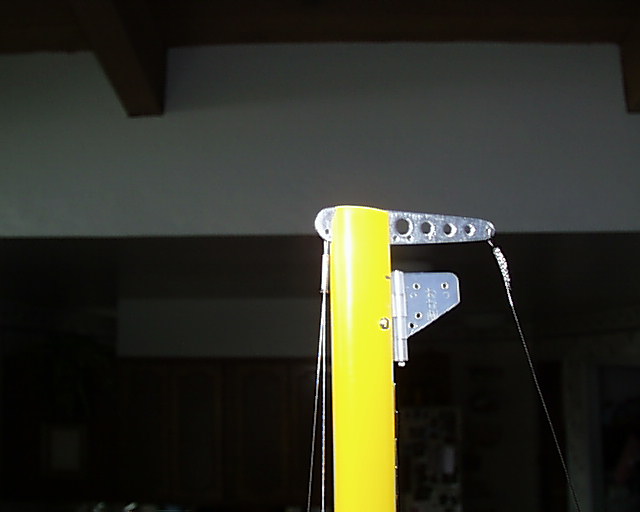
The object of the hinge is to secure the headboard luff to the mast track. Then, any line holding the head to the mast needs to be close to the luff. This is another one of those areas where the details are important.
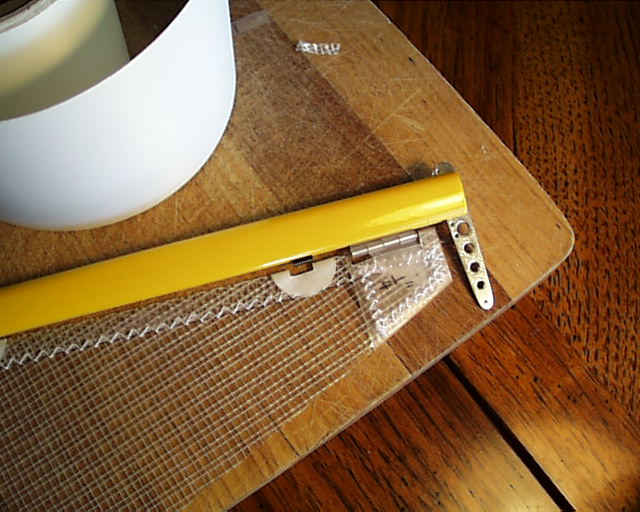
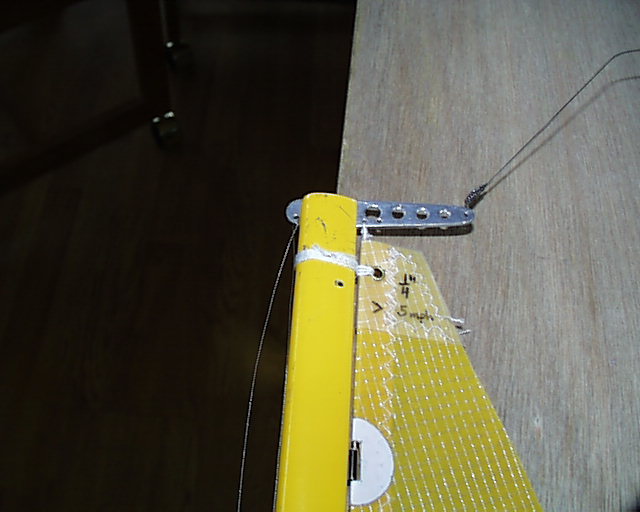
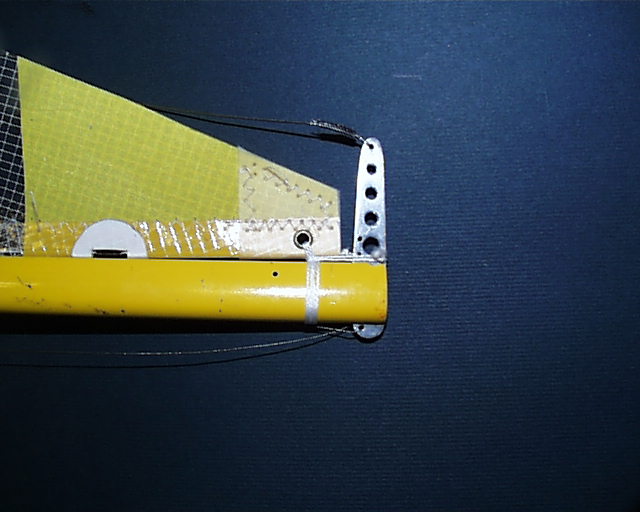
Fixed or Line Hinge Two Methods Headboard Fixed Hinge Installation Slide the hinge up the mast with the tapered part of the tab down. Mark the mast 5/8" below the top. Align the top of the hinge to that mark. Drill a hole, with the #55 bit, through the hinge wood adapter but not through the other side of the mast. Pin the hinge in place with a cut down 18 gauge escutcheon. This alignment will allow clearance for the sail headboard beneath the mast crane.
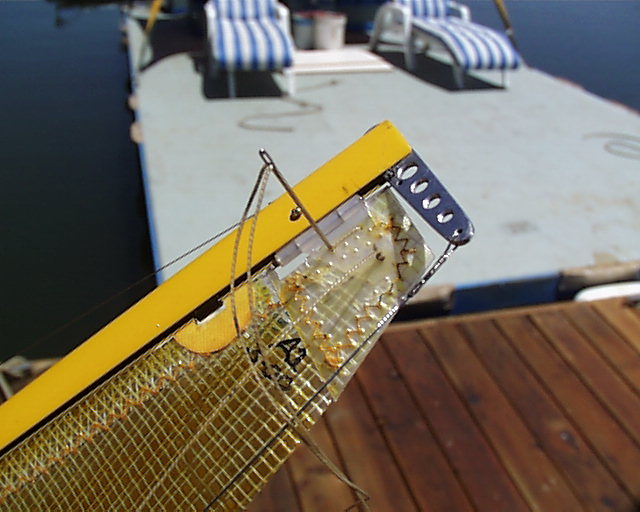
Preparing The Sail Headboard Mark the luff of the mainsail at the top thread line by the sailmaker on the headboard. You will need a 1" cutout for the hinge section of the part. Play with this till you have a feel for the installation. Notch out the luff, about 1/8", so the hinge will fit inside.
Then use the razor knife to slice the threads inside the headboard so the hinge tab will slide inside between the heavy material. You may need to trim the tab of the hinge to fit. This is okay. When you have a nice fit trim away the threads and put the sail away until you are ready to install it.
Mating The Mainsail To The Headboard Fixed Hinge When the main is installed on the mast it is not to be secured to the hinge till the Pre-Tuning phase. During this phase the rig will be standing on the boat with all controls functioning. As stated in that section, the pre-tuning is conducted indoors. The boat is rolled over in the cradle, the sails are close hauled and the twist of the main is set to nominal. The headboard is then sewn to the hinge in proper alignment.
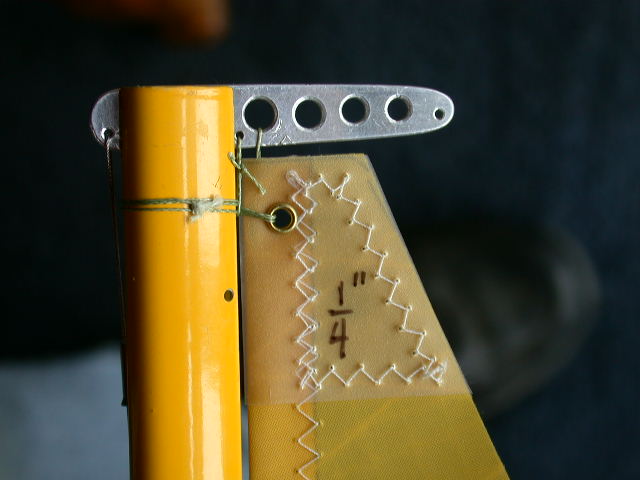
Headboard Line Hinge If you are going to use this hinge, advise the sailmaker that you need a grommet 3/8" down from the head and 3/16" in from the luff. Ask him to leave room for the jackline to feed through. This is important as some sailmakers place a grommet in top center of the headboard and is not useful in this process. Others will block the luff seam making a line feed through the area very difficult.
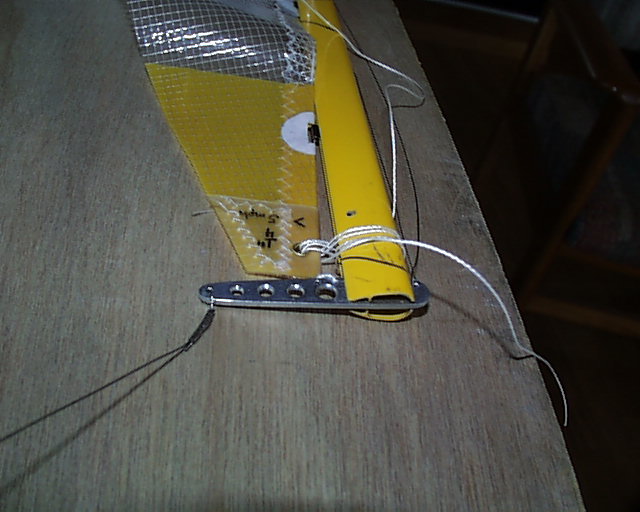
The line hinge provides the same function but is thought to be less restrictive, particularly in light air. It is easy to do. This hinge is installed when the mainsail is installed on the mast. The idea is to make a figure 8 routing of 80# Spectra or 30# Spiderwire. The confluence of the two loops are, of course, the hinge and should not be tight. Here you see the first effort in such a hinge. Two wraps should be all that is needed instead of the three shown. Finish this with a square knot away from the hinge.
A line loop is run around the line hinge and over the crane. This will keep the mainsail from dropping under wind pressure. Finish it with a square knot.
|